
When choosing a walkie talkie earpiece for professional communication, cable design is more important than it may first appear. A headset needs to connect securely to the radio, allow convenient push-to-talk operation, and remain comfortable during long working shifts. For security teams, event staff, warehouse operators, and other radio users, the choice often comes down to a single-wire or two-wire earpiece.
So, what is the difference between a single-wire and a two-wire walkie talkie earpiece? The main distinction is how the audio and communication components are arranged along the cable. A single-wire design generally combines the earpiece and microphone/PTT connection into one streamlined cable assembly, while a two-wire design separates the listening and microphone/PTT paths into individual leads.
Neither design is automatically better for every user. The right option depends on how the radio is worn, where the microphone needs to sit, how discreet the equipment should be, and how frequently the user needs to operate the push-to-talk button.
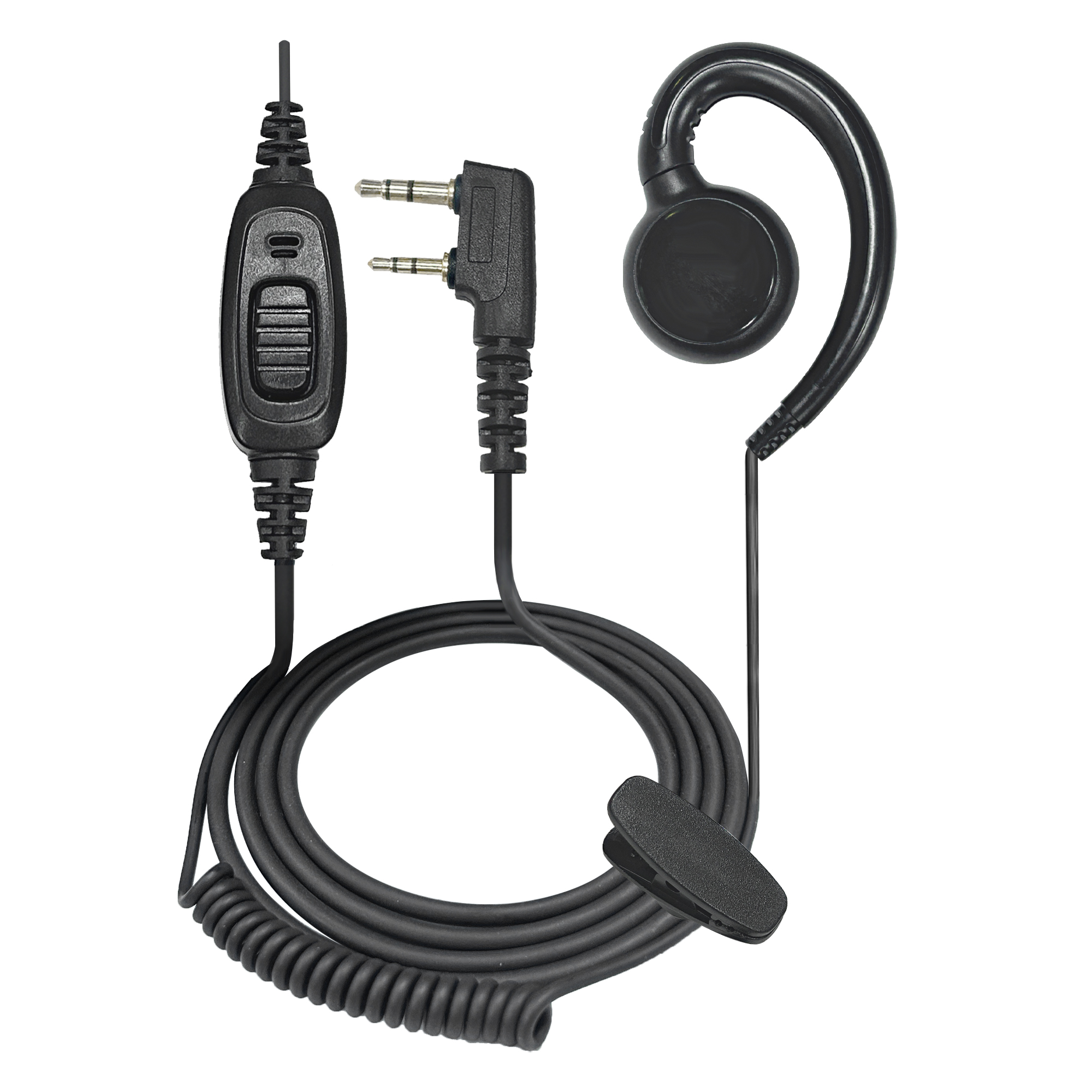
Single-wire radio earpiece with integrated inline PTT assembly
A single-wire walkie talkie earpiece uses a streamlined cable arrangement to connect the listening unit and the microphone or push-to-talk control to the radio. In many common designs, the earpiece, microphone, and PTT button are integrated into one cable assembly.
This configuration reduces the number of separate cable sections that the user needs to manage. It is a practical choice for daily communication because the headset can be clipped to clothing and operated without holding the radio in the hand.
Common single-wire features include:
For example, the G-Type Earhook Single-Wire PTT Headset from Earphonic features an inline PTT control, metal clip, rotatable speaker, and a small pickup microphone. Its connector can also be customized according to the customer's radio requirements.
Single-wire headsets are commonly considered for security staff, retail employees, warehouse teams, event coordinators, and other users who need straightforward push-to-talk communication throughout the working day.
A two-wire walkie talkie earpiece uses separate cable paths for listening and microphone/PTT communication. Rather than arranging all functions through one shared cable route, the design separates the audio output and the microphone or push-to-talk connection.
This structure can give users more flexibility in positioning the earpiece and microphone components. For example, the listening lead can run toward the ear while the microphone/PTT lead is positioned closer to the collar or another convenient operating point.
Depending on the model, two-wire earpieces may include:
Two-wire designs may be useful for users who prefer separate cable routing or need to position the microphone and earpiece independently. However, the actual layout varies by product, so buyers should review the product structure rather than assume every two-wire model has the same configuration.
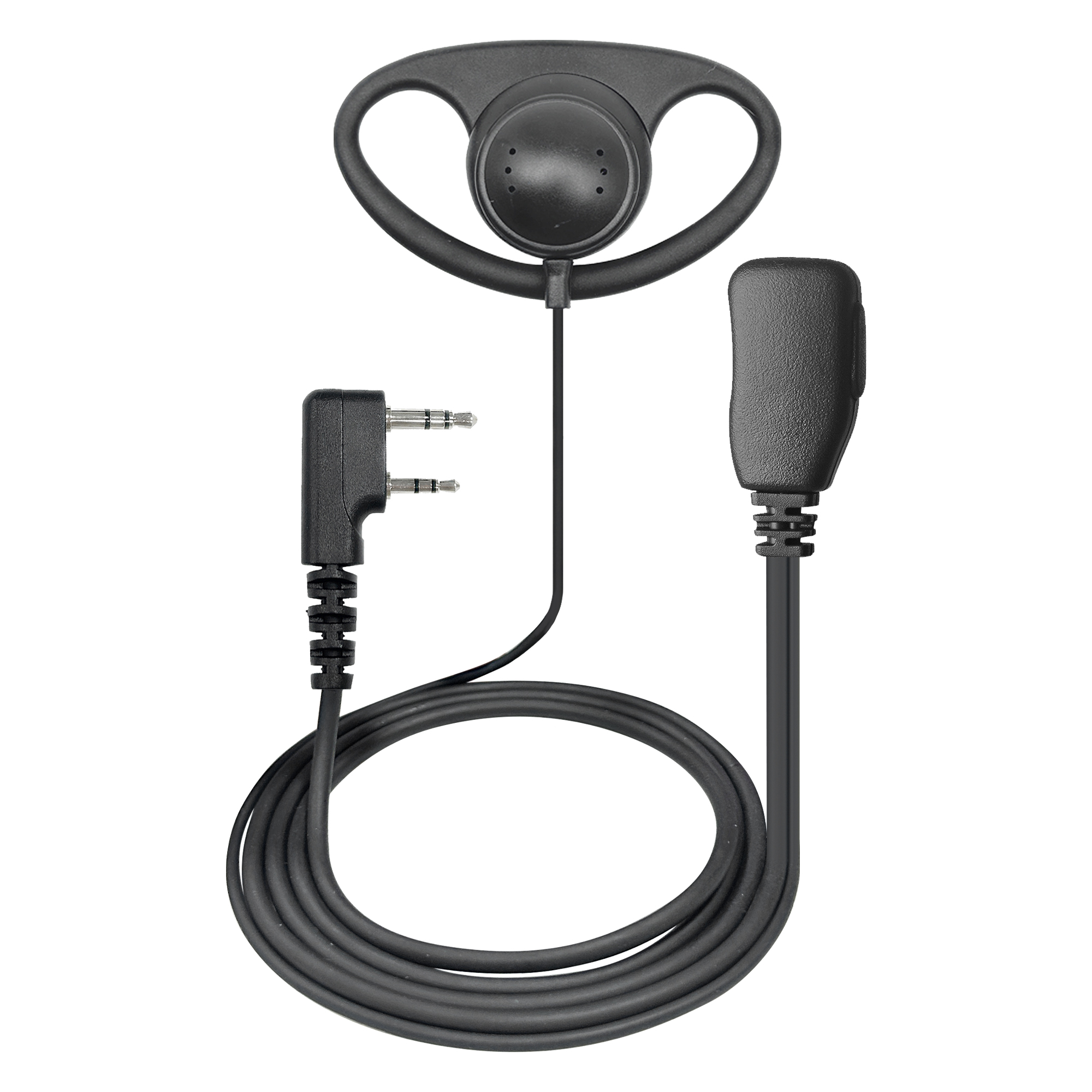
Two-wire earpiece example with separate listening and communication components
Buyers can review the available Two Wire Earpiece collection to compare different radio headset configurations.
The most useful way to compare these two designs is to look at their cable arrangement, wearing flexibility, daily operation, and suitability for different working environments.
| Comparison | Single-Wire Earpiece | Two-Wire Earpiece |
|---|---|---|
| Cable structure | One streamlined cable assembly | Separate listening and microphone/PTT cable paths |
| Component arrangement | Components are generally integrated into one assembly | Listening and communication components are separated |
| Cable management | Generally simpler routing | More routing options but potentially more cable sections to manage |
| Microphone positioning | Usually integrated with the main assembly | Can allow more independent positioning, depending on design |
| Daily operation | Straightforward for routine PTT communication | Useful when separate component placement is preferred |
| Typical applications | Security, retail, warehouse, event operations | Security, professional communication, and specialized radio setups |
| Main selection factor | Simple cable layout and convenient operation | Independent cable routing and component positioning |
One important point: the number of wires does not automatically determine sound quality, microphone sensitivity, or communication range. These factors depend on the speaker, microphone, electrical specifications, connector design, and radio compatibility.
For many security teams, the best earpiece is the one that supports reliable communication without interfering with routine duties. Security personnel may need to communicate while walking, checking access points, managing visitors, or coordinating with colleagues.
A single-wire earpiece is often a practical option when the team wants a simple cable arrangement and convenient inline PTT operation. It can be clipped to clothing, with the earpiece positioned at the ear and the radio carried on a belt or uniform.
A two-wire earpiece may be worth considering when the user prefers separate positioning of the listening and microphone components. This can be helpful when the radio is carried in a specific location or the uniform requires a particular cable arrangement.
For security applications, buyers should also consider:
For teams that require a more discreet listening setup, an acoustic tube design may also be worth evaluating. See the Two-Way Radio Accessories range for additional headset and earpiece options.
Not necessarily. Discretion depends more on the earpiece shape, microphone design, cable color, wearing position, and how the radio is carried than on the number of wires alone.
For example, a single-wire acoustic tube earpiece can provide a low-profile listening arrangement, while a two-wire headset may offer separate positioning for its microphone and listening components. Both designs can be configured for professional use, depending on the product.
When discreet communication is important, buyers should compare the following features:
For discreet communication, the complete headset configuration matters more than simply choosing one wire or two wires.
This is a common question among radio accessory buyers, but cable configuration alone does not determine audio performance.
Sound quality is influenced by the speaker impedance, sensitivity, frequency response, microphone characteristics, cable quality, connector contacts, and the radio itself. A well-designed single-wire headset can deliver clear audio, while a properly engineered two-wire headset can provide equally suitable performance.
When comparing products, ask the supplier for relevant technical specifications, including:
For noisy workplaces, microphone placement and microphone noise-reduction design may be especially important. Buyers should test the complete headset with the actual radio and in a representative working environment before placing a large order.
One of the most common purchasing mistakes is selecting an earpiece based only on its cable design while overlooking the radio connector.
Single-wire and two-wire describe the headset's cable arrangement. They do not automatically tell you whether the plug is compatible with a particular radio. Even products designed for the same radio brand may use different connector structures.
Before ordering, confirm these details:
Earphonic supplies radio accessories for major two-way radio brands, including Motorola, Kenwood, Hytera, Icom, Sepura, and Vertex. However, compatibility should always be confirmed against the exact radio model and connector specification rather than assumed from the brand name alone.
For example, the Walkie Talkie Earpiece for Radio Two Way is listed with a Kenwood K1 connector and is designed for compatible Kenwood TK-series and other specified radios. Buyers should confirm the exact connector before ordering.
Different working environments place different demands on radio accessories. The following recommendations can help purchasing teams narrow down their options.
Security and property management: A single-wire earpiece is a straightforward choice for routine patrols and daily coordination. A two-wire design may be suitable when separate microphone and listening positions are preferred.
Hotels and hospitality: Staff often need comfortable headsets that can be worn throughout a shift. Cable appearance, earpiece comfort, and quick PTT access should be considered alongside radio compatibility.
Event management: Event teams communicate while moving between different locations. A secure earhook, accessible PTT button, and appropriate cable length can help maintain convenient operation.
Warehousing and manufacturing: Workers may operate radios while handling equipment or moving goods. A headset with a secure wearing structure and durable cable is worth considering. The choice between one-wire and two-wire depends on the team's preferred cable routing.
Professional radio distribution: Distributors and wholesalers may benefit from stocking both designs. Offering multiple cable configurations, connector options, and wearing styles can help serve customers with different radio systems and operational needs.
For distributors, radio dealers, and organizations purchasing headsets for multiple employees, product selection should include more than the initial unit price.
A suitable supplier should be able to clarify product specifications, connector compatibility, customization options, and quality-control arrangements before production.
Consider the following purchasing checklist:
Earphonic focuses on two-way radio headsets and related accessories, with manufacturing, R&D, and OEM/ODM capabilities. The company reports an annual radio headset capacity of 500,000 pieces and exports to more than 80 countries. These capabilities can be relevant to distributors and professional buyers planning repeat orders or customized headset projects.
For buyers with specific product requirements, the supplier can also discuss customized product specifications, materials, logos, packaging, and performance features according to the project scope.
If your priority is a simple cable arrangement and convenient everyday PTT operation, a single-wire walkie talkie earpiece is a practical starting point. If your team prefers separate routing for listening and microphone components, a two-wire design may be worth evaluating.
There is no universal winner. The better option is the one that matches the radio connector, wearing preference, work environment, and communication requirements.
Earphonic offers both single-wire and two-wire radio earpiece options, together with different earhook styles and connector configurations. Whether you are purchasing for a security team, supplying radio accessories to dealers, or developing a private-label headset range, confirming the application and radio model first will make product selection more accurate.
Contact Earphonic to discuss your required earpiece configuration, radio compatibility, or OEM/ODM project.
Earphonic / Xiamen Yuhong Import and Export Co., Ltd.
Website: www.accessoriesradio.com
Email: info@accessoriesradio.com
Tel: +86-592-598082
What is the main difference between a single-wire and a two-wire walkie talkie earpiece?
A single-wire earpiece generally uses one streamlined cable assembly to connect the listening and microphone/PTT components. A two-wire earpiece separates the listening and microphone/PTT cable paths, allowing different component positioning depending on the model.
Is a single-wire earpiece better for security guards?
A single-wire earpiece is often a practical option for security guards who want simple cable management and convenient inline PTT operation. However, the best choice depends on the uniform, radio carrying position, wearing preference, and working environment.
Is a two-wire earpiece more discreet?
Not automatically. Discretion depends on the earpiece shape, microphone size, cable color, and wearing position. Both single-wire and two-wire designs can be used in professional communication setups.
Does a two-wire earpiece have better sound quality?
Not necessarily. Audio performance depends on speaker and microphone specifications, cable quality, connector design, and radio compatibility. The number of wires alone does not determine sound quality.
Are single-wire and two-wire earpieces compatible with all walkie talkies?
No. Compatibility depends on the connector type and the radio model. Buyers should provide the exact radio brand and model number to the supplier before ordering.
Can I use a single-wire earpiece with a two-pin radio connector?
In some cases, yes. Cable configuration and connector pin arrangement are separate specifications. A single-wire headset may be available with a two-pin plug, provided that the connector and wiring are designed for the intended radio.
Which earpiece is better for warehouse and factory workers?
Both designs can be suitable. A single-wire model may be preferred for simpler cable management, while a two-wire model may suit users who want separate microphone and listening cable positioning. Cable durability, secure wearing, and PTT access are important selection factors.
Can Earphonic customize single-wire and two-wire walkie talkie earpieces?
Earphonic supports OEM and ODM services. Customization can include product specifications, materials, colors, connector configurations, logo printing, packaging, and selected product features, subject to project requirements.
What information should I provide when requesting a radio earpiece quotation?
Provide the radio brand and exact model, required cable configuration, preferred wearing style, connector type, estimated order quantity, and any special requirements for the microphone, PTT button, or packaging.
 SUBSCRIBE
Please read on, stay posted, subscribe, and we welcome you to tell us what you think.

Xiamen Yuhong Export & Import Co., Ltd. was founded in 2023. We specialize in providing one-stop solution for walkie-talkie accessories, focusing on the R&D and supply of high-quality walkie-talkie microphones and headsets. Our product portfolio covers walkie-talkie headsets, external speakers, wireless Bluetooth accessories and other supporting accessories. Tailored for multiple industry scenarios, our products consistently deliver outstanding audio performance.


Email : info@accessoriesradio.com
Address: 215-34, 2/F, Sihai Building, Fanghu West Rd, Huli Dist, Xiamen, Fujian, China Post Code:361006
2026 @ Xiamen Yuhong Import and Export Co.,ltd. All Rights Reserved. Sitemap | Blog | XML | Privacy Policy  IPv6 network supported

 English
 русский
 español
 português
 العربية
 中文